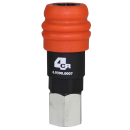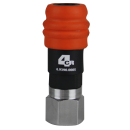
9390.0005

Air coupler
1/2 female

In a bodywork repair shop, the quality of paint and spray work depends as much on the expertise of the bodybuilder as on the tools used. Among these tools, blowguns and pneumatic fittings occupy a central place. Their use ensures clean, fast and long-lasting finishes, while guaranteeing the safety and efficiency of the process on a bodywork component.
Quality fittings and couplings, designed by a recognised manufacturer or brand, are generally made from steel or a wear-resistant material. These materials guarantee protection against leaks and have a long service life, even at high pressures of up to several bars. Male and female models ensure a solid connection between the hose and the gun, providing quick and safe access to your tools.
A good coupling allows precise air flow, essential for a sprayer or gun. This regulates the airflow to the Nozzle and Paint, ensuring even application and easy cleaning of surfaces. Flow control also ensures efficient working, limiting paint wastage and imperfections on the bodywork.
High-quality fittings and couplers make it possible to change tools quickly, whether it's a gun, a sprayer or a cleaning nozzle, without compromising pressure or flow. This versatility allows easy access to difficult areas and optimum preparation of surfaces before painting.
Blowguns are pneumatic tools used to clean and dry surfaces before or after spraying paint. They effectively remove dust, sanding residues and dirt that could compromise paint adhesion and the quality of the final finish. By blowing compressed air in a targeted manner, they reduce the risk of surface defects such as bubbles, grains or irregularities, guaranteeing a smooth, even finish.
Pneumatic fittings provide a reliable connection between tools and the compressed air network. In the workshop, they allow tools to be changed quickly without loss of pressure, guaranteeing continuity of work. Quality fittings minimise air leaks, optimise the power of blow guns and spray guns, and contribute to the safe operation of pneumatic equipment.
During car paint operations, a well-equipped workshop with blowguns and fittings makes it possible to:
Pneumatic blowers and fittings are more than just accessories in the body shop: they are essential tools for ensuring the quality, safety and efficiency of spray work. Investing in high-performance equipment enables bodybuilders to achieve impeccable finishes and meet the standards of professional workshops.
Blowgun connectors come in a variety of formats:
Air blowers blow dust, filings, shavings or sanding residue onto surfaces, tools or the floor. This ensures a clean working environment, essential for painting and finishing.
Before spraying Paint, a clean surface is crucial for perfect adhesion and a smooth finish. The blower removes fine particles that the cloth cannot remove.
By quickly blowing away dust and splashes of water or products, the preparation and finishing stages are speeded up, saving considerable time during repairs.
Air blowers can be used to:
They allow cleaning without direct contact with surfaces or chemicals, reducing the risk of injury or damage to auto parts.
In conclusion, a quality connector is the foundation of any professional pneumatic or electrical system. Every part must be designed with precision, from the thread adapted to the size of the hose to the integrated electrical conductor if necessary. Whether for dust collection or a specific technical application, a well-chosen connector guarantees optimum, reliable results every time.
Discover our largest ranges and categories for your bodywork repairs on element: Spray, paint booth filtration, dryer, hydraulic press... A wide choice for bodywork professionals looking for specific products for repairs. Our different ranges are offered at the best prices and with fast delivery to help you keep car repair costs under control. We offer several methods of payment to give you the freedom to work with us.