INFRASECH1

Infrared dryer 220V
1 cassette + bar

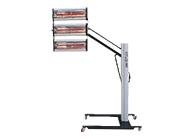
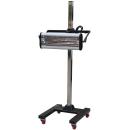
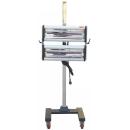
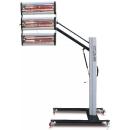
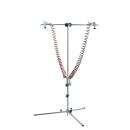
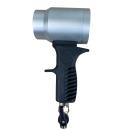
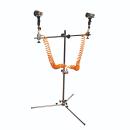
The Infrared dryer is an easy and essential tool in Paint body shops. It is designed to use infrared ray technology to quickly dry paints, Clearcoats and Putties applied to vehicles. Unlike traditional air or oven drying, the Infrared dryer acts directly on the molecules of the coating, providing efficient, superior and even drying.
The dryer is now established as a superior solution for speeding up and optimising car body drying processes. By emitting short or medium waves, this technology allows heat to penetrate faster and more evenly than traditional methods. Each infrared cassette diffuses controlled energy to achieve precise, effective and safe drying, even on delicate repairs.
This drying method is extremely easy to use. Whether it's for a local Touch up or a complete project involving an entire panel, the Infrared dryer guarantees simple installation, reduced heating time and professional-quality results right from the outset. It also keeps energy consumption to a minimum, while offering a high drying capacity suitable for most paint and Clearcoat products used in the automotive industry.
Modern models feature an advanced temperature control system, programmable cycles and, in some cases, a mobile structure for easy positioning around the vehicle. This mobility is invaluable for workshops looking to save time and maximise productivity. Depending on requirements, there is an option for independent adjustment by cassette, enabling the power to be adapted to each zone treated.
To choose the most suitable Infrared dryer, it is essential to assess the type of work to be carried out, the frequency of use and the surface area available. A good tip is to analyse the relationship between power, coverage area and precision of the appliance. Professionals recommend taking into account the high quality of the lamps, the reliability of the chassis and the ease with which consumables can be replaced.
Thanks to the diversity of models available and the many technological innovations, it is now possible to select the best equipment for each workshop. A common recommendation is to invest in a dryer that offers several power levels and good manoeuvrability, guaranteeing a controlled repair project and optimum results.
Infrared drying reduces drying time from several hours to just a few minutes, depending on the thickness of the paint and the type of coating. This brings production cycles closer together and increases workshop productivity.
Unlike hot air, which only heats the surface, infrared rays penetrate the painter and heat from the inside out, ensuring even drying and reducing the risk of blisters, runs or marks.
Infrared dryers generally consume less energy than traditional large drying ovens, as they target the surface to be treated without heating the entire workshop.
They are suitable for different types of bodywork part work: full paint, Touch up, filler, Clearcoat and some special treatment applications. Some models allow you to adjust the intensity and duration for each material.
Fast drying limits the time the surface remains tacky, reducing the risk of dust and particles being included in the finish.
Infrared dryers offer different wattages (such as 1000 to 3000 watts per lamp), with intensity and time settings. The distance between the lamp and the surface has a direct influence on drying time and uniformity.
Modern models include safety devices to prevent overheating, protect operators from burns and allow precise positioning without effort. Some are equipped with timers, thermostats and surface sensors for optimum control.
Infrared dryers are suitable for acrylic, polyurethane and Clearcoat paints, but can also dry polyester or epoxy putties, making them a versatile tool in bodywork.
In a professional workshop, the Infrared dryer is positioned at the optimum distance from the surface to be treated. Once the paint or Clearcoat has been applied, the bodybuilder adjusts the power and drying time. The penetrating heat allows the product to harden more quickly, while avoiding surface defects. In the case of Touch up, the dryer can be easily moved to target only the concentrated area. It has therefore become an essential tool for professional bodybuilders, thanks to its speed, precision and energy efficiency. It improves the quality of finishes, speeds up the production cycle and reduces the risk of paint defects. By combining versatility and ease of use, it enables workshops to modernise their workflow while guaranteeing professional results.
The Infrared dryer uses infrared rays, which are a form of electromagnetic radiation invisible to the naked eye. Unlike hot air or traditional ovens, these rays heat the molecules of the paint or Putty directly, rather than the surrounding air.
This is often referred to as heating from the inside out: the infrared rays penetrate the layer and cause the solvents to evaporate quickly, allowing the paint to dry evenly and harden thoroughly.
The Infrared dryer acts as a "targeted heater", speeding up drying while maintaining optimum finish quality. Its main advantage is that it dries evenly and quickly, while penetrating the paint layer, unlike air drying, which only heats the surface during bodywork repairs.
1000 to 1500 W per lamp: this is the most common wattage for portable dryers. It offers Fast drying without the risk of burning the paint on small areas.
1500 to 2000 W per lamp: 2 or 3 lamp dryers, each between 1.5 and 2 kw are ideal. This provides deep, uniform heating over larger surfaces.
2,000 to 3,000 W per lamp: this is the power used in fast production workshops, when you're looking for drying in 5 to 10 minutes.
In conclusion, an efficient infrared heater has between 1 and 3 lamps, each between 1 kW and 2 kW. Total power is therefore often between 1kW and 6kW, depending on the model. The higher the wattage, the more controlled the heating needs to be.
In conclusion, before investing in a bodywork dryer, it is essential to check its technical specifications to ensure that it really does meet the needs of the workshop. Although infrared light offers fast, precise drying, each piece of equipment can have its drawbacks, depending on the type of repair or surface to be treated. To ensure optimum performance during bodywork work, it is advisable to choose a curing lamp that is suited to the frequency of use and the size of the areas to be dried. In this way, the workshop benefits from controlled, safe drying that is perfectly suited to professional requirements.